

Dear alumni,
Some of you earned your degrees here—through the Medical School, Graduate School, or the Phillips School of Nursing. Others trained with us as residents, fellows, or postdoctoral scholars. Many of our appointed faculty rightly consider themselves alumni as well: shaped by Mount Sinai and continuing to shape it in return. There is no single Mount Sinai alumni story.
Your paths, your memories, and your relationships with a Mount Sinai education are wonderfully diverse. And yet there is one thing we all share: a connection to a truly distinctive institution—one defined by rigorous science, state-of-the-art and compassionate clinical care, and a culture that has always encouraged people to ask bigger questions about what medicine and science can be.
As I continue into the second year of my tenure as the Anne and Joel Ehrenkranz Dean of the Icahn School of Medicine at Mount Sinai, I am writing first to say thank you and to share my perspective on important matters happening today at the School—and second, to invite you into what comes next.
For many years, I have had the privilege of serving this community as a scientist, physician, and academic leader. Stepping into the role of Dean has been both humbling and energizing because it offers an opportunity to set a fresh direction for the next phase of education, discovery, and impact.
That next phase is already taking shape. At every level of our educational enterprise, we are asking a fundamental question: How do we prepare learners not just for today’s practice of medicine, nursing, and science, but for the realities they will face decades from now? As alumni, you represent the living answers to this question, having learned at Mount Sinai and now facing your own possibilities, challenges, and new frontiers after your education here was completed.
I wanted to share a few reflections on education at Mount Sinai right now:
- In medical education, 2025 marked a defining milestone with the continued advancement of ASCEND—one of the most ambitious curricular transformations in the Medical School’s history. ASCEND reflects a belief that future physicians must be adaptable, interdisciplinary thinkers who are comfortable integrating clinical reasoning, science, technology, and human context from the very beginning of their training. In 2026, this approach is extending more deeply into the core clinical clerkships, bringing the same integrative philosophy to students’ formative experiences in patient care.
- Graduate education is undergoing equally significant evolution. The Graduate School of Biomedical Sciences and our newly formed Department of Graduate Education have introduced revitalized Master’s programs with new tracks and concentrations aligned to emerging career pathways and workforce needs, while our PhD Programs continue to attract and train the very best of our nation’s future biomedical and health care researchers. We have been at the forefront of incorporating biomedical engineering, artificial intelligence, and data science into our graduate programs.
- For alumni who trained as physician-scientists—or who now mentor them—the MD-PhD Program continues to demonstrate strong national leadership. The goal is simple but critical: to ensure that future physician-scientists are prepared to lead at the intersections of discovery, patient care, and innovation.
- We created the Mount Sinai Academy of Physician Scientists (MAPS) to nurture and sustain a workforce of cross-trained individuals from junior trainees to senior faculty (including MDs, MD-PhDs, and all other clinician-investigators). Mount Sinai is committed to being part of the innovative national solutions that will be required to ensure a robust community of physician-scientists who are integral to the future of biomedicine and health care in the United States.
- Across public health and health administration, we are modernizing curricula to reflect a growing emphasis on “whole person” health and a data-driven approach to improving population health and translating evidence into practice, both in the United States and across the globe.
- Nursing education is also in the midst of meaningful change. The Phillips School of Nursing has aligned its baccalaureate curricula with the new competency-based model developed by the American Association of Colleges of Nursing. Enrollment continues to grow, and we anticipate state approval of a new Master of Science program for Family Nurse Practitioners—another step toward expanding advanced practice training.
- Many alumni maintain their strongest ties to Mount Sinai through Graduate Medical Education, and for good reason. Mount Sinai sponsors the largest GME program in the country, with all programs fully accredited. In 2025 alone, residents and fellows published close to 1,000 scholarly contributions in peer-reviewed journals—a testament to the intellectual energy of our trainees and the faculty who mentor them. We embrace house staff from our legacy hospitals–Roosevelt Hospital, St. Luke’s Hospital, and Beth Israel Hospital—as part of the Mount Sinai family.
Here are some of my thoughts on where we’re going:
Medicine and science are being reshaped by artificial intelligence, data science, and new digital tools in ways we haven’t seen for a century. What matters is how we choose to respond.
Mount Sinai has made a deliberate commitment to integrate AI into education in ways that are secure, ethical, and genuinely useful. In 2025, the School received national recognition for becoming the first medical and graduate school to provide all students with access to a secure, HIPAA-compliant version of ChatGPT designed specifically for higher education.
Throughout all of this, one principle remains constant: technology must enhance—not replace—judgment, empathy, and human connection. Our trainees are learning not only how to use new tools, but how to ask when, why, and how they should be used.
Physical learning environments matter as well. A major renovation of teaching and learning spaces in the Annenberg building—more than 25,000 square feet across two floors—is now underway, designed to support small-group learning, interdisciplinary collaboration, and technology-enabled education. Expansion plans are underway for the Phillips School of Nursing. The opening of the Levy Library Student Commons adds another flexible, student-centered space that reflects our commitment to both academic success and well-being.
All of this momentum raises an essential question: where do Mount Sinai Alumni fit in?
The answer is simple. Alumni are central to our future.
Today, our alumni community includes tens of thousands of physicians, scientists, nurses, entrepreneurs, educators, and health leaders around the world. That collective expertise, perspective, and institutional memory is one of Mount Sinai’s greatest assets. When alumni reconnect with Mount Sinai and with one another, extraordinary things happen:
Students and trainees gain mentors who help them navigate complex career decisions, build resilience, and imagine paths they may never have considered.
Faculty and alumni form new scientific collaborations and intellectual partnerships that accelerate discovery.
Entrepreneurial ideas find the expertise and networks needed to move from concept to impact.
Alumni philanthropy supports the next generation of students, of important student and community programming at Mount Sinai, and the future of health care.
Recognizing this, we are working closely with Ebby Elahi, MD ’96, MSH ’00, MBA, President of Mount Sinai Alumni. We are strengthening ties to our broad alumni community and the structures that support alumni engagement. Mount Sinai Alumni now brings together graduates of our medical, graduate, and nursing programs; former residents, fellows, and postdoctoral trainees. We can leverage our strength in numbers to extend the influence of our community and the benefits of being part of the Mount Sinai network. We can also celebrate the common experiences from individual programs, schools, and classes.
There is no single “right” way to be an engaged alum. What matters is finding the form of connection that fits your life and interests.
You might choose to stay informed—through alumni communications, institution updates, and events that highlight what is happening across Mount Sinai.
You might engage through lifelong learning and CME, continuing to learn alongside colleagues who share your commitment to excellence.
You might mentor a student or trainee through Icahn School Connect, our alumni–student engagement platform. Even a small investment of time—a conversation or two each year—can have an outsized impact.
Or you might attend an alumni gathering, help shape an event, or reach out with an idea for how we can better serve this community.
Here is my invitation to you:
If you do one thing after reading this letter, I hope it is this: take a step back into the Mount Sinai community.
Update your information. Raise your hand to mentor. Attend an event. Share an idea. Reconnect with a colleague. Make a gift.
Our story has always been written by people who believed that biomedicine and health care can be better—more scientific, more humane, more equitable, and more innovative. That is the legacy you inherit and embody as Mount Sinai Alumni, and it is the legacy our students and trainees will carry forward.
Thank you for what you have already built. I look forward to what we will build together. I hope to see you on campus, online, or at one of the alumni in the coming year.
With appreciation,
Eric J. Nestler, MD, PhD
Anne and Joel Ehrenkranz Dean
Icahn School of Medicine at Mount Sinai
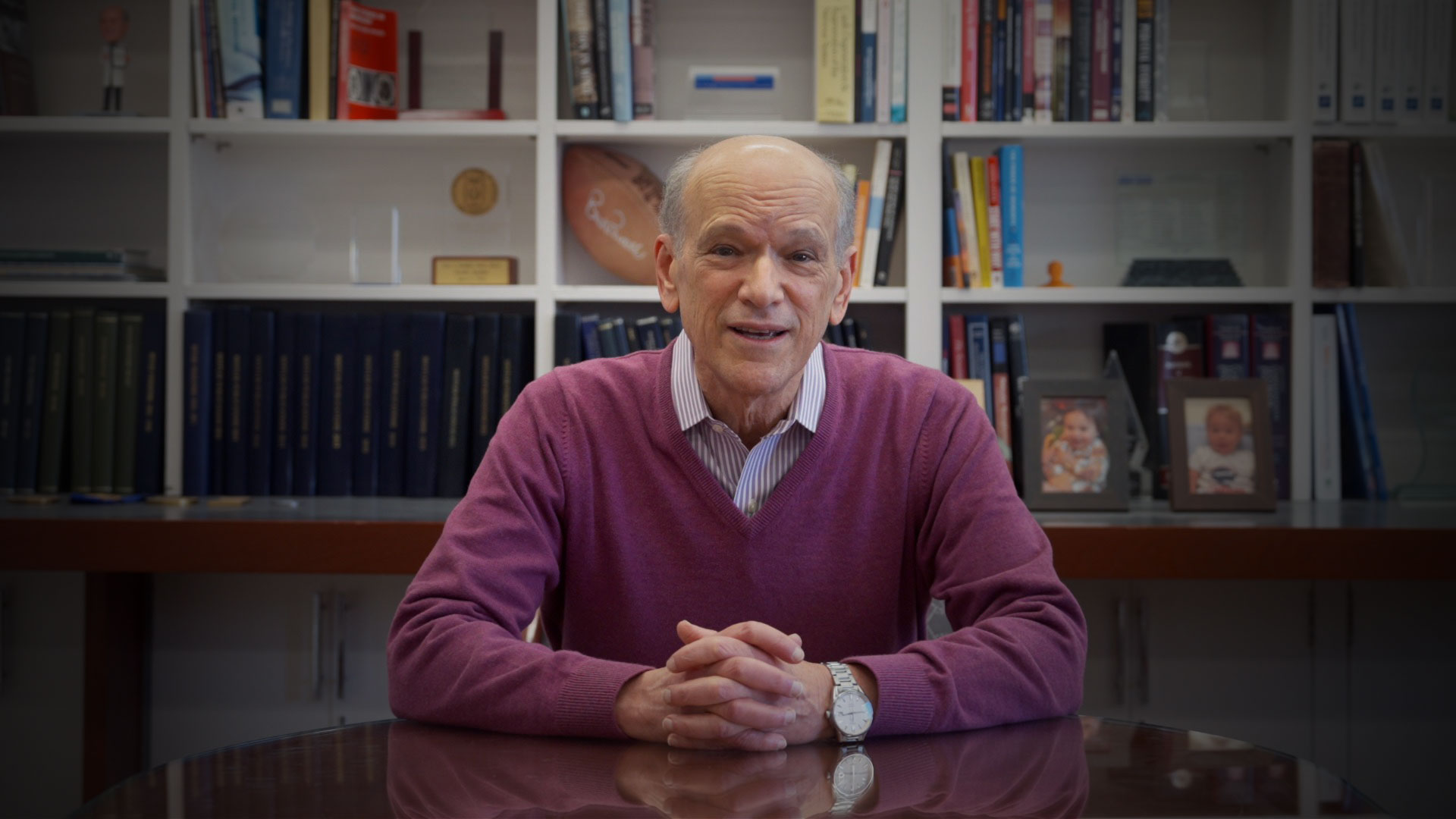
Eric J. Nestler, MD, PhD
Anne and Joel Ehrenkranz Dean
Icahn School of Medicine at Mount Sinai