
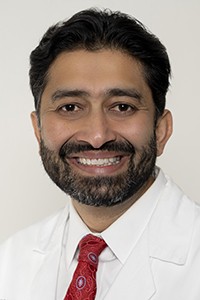
Chirag Gandhi, MD, MSH ‘07 is the Director of Neurosurgery at the Westchester Health Network and Professor and Chairman, Dept of Neurosurgery, at New York Medical College. He attended the Neurosurgery program at the Mount Sinai Hospital after attending Rutgers University- New Jersey Medical School.
Choosing Mount Sinai
Dr. Gandhi’s first priority when choosing a program was to find one with a diverse case mix to ensure robust training. As he further explored Mount Sinai Neurosurgery during his Acting Internship, he found an engaged, talented, and subspecialized faculty with a growing focus on clinical research. These critical factors combined cemented his desire to join the neurosurgery program at MSH.
Dr. Gandhi misses the training environment at the program most. For all its early stresses in coping with the acuity of the pathology and steep learning curve, it eventually brings you to a point where you begin to appreciate the larger picture and start mastering a broad range of surgical technique. The elation that accompanies each of these milestones and the opportunity to share this growth with close resident colleagues and faculty mentors is a very powerful experience.
Research Focus
His research has focused largely on his clinical passion of neurovascular disease, which really crystalized at Mount Sinai where he had the chance to work with some true pioneers in the field such as Drs. Bederson, Winn, and Patel.
Over the course of his career, with the help of his neurovascular team, he has worked on characterizing patient outcomes after sustaining intracranial vascular injury, optimization strategies in the neurointensive care unit, and more recently, trying to understand the role that “frailty” plays in neurosurgical outcomes.
Additionally, the COVID pandemic has had massive implications for delivery of stroke care and the types of neurovascular emergencies encountered in the acute care setting. Some of his most recent work has focused on better explaining the effects of the virus on the cerebral vasculature, especially in younger patients. The most invigorating part of his research journey has been the opportunity to contribute to the collective knowledge in the specialty.
His proudest accomplishment and first love in neurosurgery has been as an educator. In his current role as Program Director of both the Neurosurgery residency and Neurointerventional fellowship, he feels grateful to have had the chance to serve as a faculty mentor, develop new training programs, and help to impart the critical skills for the next generation of neurosurgeons.
Advice for Students
Dr. Gandhi would advise any student to always keep their eyes open for unexpected opportunity. These moments are rarely planned but astute students can capitalize on them. Early in training, it can come in modest ways such as staying a little longer for an extra surgical case that gives them a chance to make a first impression with a possible mentor. It can also include showing up when you are tired to a neurosurgery social event that makes a new connection, or later in your career, taking a leap of faith on a new job opportunity that is a little outside of your comfort zone. Dr. Gandhi looks back on these experiences now as critical forks in the road, all of them were unexpected opportunities.
Effect of the COVID-19 Pandemic
This was the first truly global pandemic in all of our lives and the damage has been staggering in terms of lives lost and new chronic illnesses related to the infection.
During the onset of the pandemic, his department quickly worked to platoon the faculty and residents to limit the possibility of widespread exposure of the entire department, focusing clinical efforts on staffing the Neuro-ICU, which was completely filled with COVID patients, and ensure on-going emergency neurosurgery. Fortunately, much has improved since those days in early 2020 and along the way important lessons have been learned in resilience and teamwork. Even a few silver linings became evident such as a dramatic increase in departmental research productivity with less time in the operating room.
While the past year has been so arduous, from the perspective of scientific advancement, it has been nothing short of miraculous. In one year, human ingenuity has been able to identify and genetically sequence the virus, create and test a vaccine, and deploy that vaccine globally. While the entire process has had its challenges and debate, we need to at least acknowledge the unprecedented pace and now work towards repairing the disruptions in our communities from this virus.
Importance of Scholarships
As a prior scholarship recipient, Dr. Gandhi fully appreciates the importance of such support for students. Firstly, the full cost of a medical education is beyond the reach of most aspiring physicians and scholarships certainly play a critical role in bridging these financial gaps. This undoubtedly adds to the diversity we seek in the medical profession by allowing those that otherwise may not have been able to afford such an opportunity to fully achieve their goals and utilize their individual potential. Additionally, being awarded scholarships was crucial to building his self-confidence as he worked to navigate the long path towards neurosurgery.